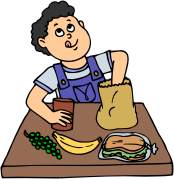
Backpacks & Lunch
For choosing the right back pack, look for the
following:
- Wide, padded shoulder straps - Narrow straps can dig
into shoulders. This can cause pain and restrict
circulation.
- Padded back - A padded back protects against sharp
edges on objects inside the pack and increases comfort.
- To prevent injury when using a backpack, do the
following:
-
 Pack light. The backpack should never weigh more than
10 to 20 percent of the student's body weight. Pack light. The backpack should never weigh more than
10 to 20 percent of the student's body weight.
- Always use both shoulder straps. Slinging a backpack
over one shoulder can strain muscles. Wearing a backpack on one
shoulder may increase curvature of the spine.
- Organize the backpack to use all of its compartments.
Pack heavier items closest to the center of the back.
- Use a rolling backpack. This type of backpack may be a
good choice for students who must tote a heavy load. Remember
that rolling backpacks still must be carried upstairs.
For more information
http://www.aap.org/advocacy/backpack_safety.pdf
Back to school is a great time to remind children about the
importance of developing lifelong healthy eating habits. By
eating at least 5 or more servings of fruits and vegetables
every day, children can reduce their future risk of many
diet-related diseases such as cancer, type 2 diabetes, and
heart disease. In addition, by incorporating fruits and
vegetables into their diets, children can help reduce their
risk of becoming overweight. And, don't forget, fruits and
vegetables pack a powerful nutrition punch because they are
loaded with vitamins, minerals, fiber and other nutrients that
give kids energy and the alertness to participate in their
daily activities.
- Stuff sandwiches full of veggies - double up on
the lettuce, tomato, and cucumber slices to add extra crunch
and flavor. Use mixed greens or fresh spinach instead of
iceberg lettuce.
- Try a veggie-loaded wrap or stuffed pita as a
main dish. Place your child's favorite vegetables such as
lettuce, raw broccoli, shredded carrots and diced tomatoes,
along with lean meats and cheeses, on a tortilla or inside a
pita for an easy-to-make sandwich alternative.
- Add fruit to a peanut butter sandwich. Kids will
love raisins, sliced bananas or thinly sliced apples in place
of jelly or jam.
- Add chopped fruits and vegetables to tuna or
chicken salad. Some favorites: apples, celery and green
onions.
- Put some pizzazz in pasta salad - add your kid's
favorite veggies to pasta and low fat Italian salad dressing.
Some to try: celery, shredded carrot, green or red pepper, raw
broccoli, raw spinach leaves, red onion, jicama, green peas,
cherry tomatoes and corn.
- Combine chopped apricots, dates, prunes, raisins
or other dried fruit with almond slices and low fat granola
cereal as a healthy side dish. In a hurry? Toss in a
single-serving box of raisins or other dried fruit.
- Fill a plastic sandwich bag with raw vegetables
such as sliced celery, radishes, cucumbers, broccoli,
cauliflower, carrots and bite-sized cherry tomatoes. To add
even more flavor, you may want to include a tasty dip, such as
salsa or low fat dressing
- Don't forget to include fresh seasonal fruits
like plums, peaches, apples and grapes. These will add color
and sweetness to the lunch.
- Make a rainbow fruit salad - cut up small pieces
of various fruits for a colorful fruit salad. Let your kids
help select a fruit from each color group when you're
shopping.
- When you are in a rush, try single-serve
applesauce with no added sugar or a fruit cup packed in 100
percent juice as a convenient lunchtime snack.
- 100 percent fruit juices make a healthy
alternative to other sugary drinks. Plus they come in many
varieties from which your child can choose. A frozen juice box
will keep your child's lunch cool and will be a refreshing,
ice-cold treat at lunchtime.
School lunches are an ideal opportunity to incorporate
fruits and vegetables into children's diets. For more healthy
eating tips and recipes, visit http://www.sd5aday.com or call:
619-681-0684
|