|
A Danger Mix!
Medications & Alcohol
NIAAA NATIONAL INSTITUTE ON ALCOHOL ABUSE AND ALCOHOLISM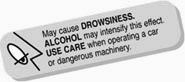
You've probably seen this warning medicines you've taken
The danger is real! Mixing alcohol with certain medications
can cause nausea and vomiting; headaches; drowsiness; fainting; loss of
coordination; and can put you at risk for internal bleeding, heart problems, and
difficulties in breathing. Alcohol also can decrease the effectiveness of a
medication or make it totally ineffective.
Many of these medications can be purchased "over-the-counter" without a
prescription, including herbal remedies and others you may never have suspected
of reacting with alcohol.
Did you know?
Many types of medication can make you sleepy. Taking these medicines while
drinking can make you even more drowsy, dizzy, and light-headed. You may have
trouble concentrating or performing mechanical skills. Mixing alcohol with
certain medicines makes it dangerous for you to drive. Combining alcohol with
some medicines can lead to falls and serious injuries, especially among older
people.
Some medications, including many popular painkillers and cough, cold, and
allergy remedies, contain more than one ingredient that can react with alcohol.
Read the label on your medication bottle to find out exactly what ingredients it
contains.
Certain medicines contain up to 10 percent alcohol. Cough syrup and laxatives
have some of the highest alcohol concentrations.
Women and older people are at higher risk for harmful alcoholmedication
reactions.
Alcohol and medicines can interact harmfully even if they are not taken at
the same time.
Remember...
Mixing alcohol and a medication puts you at risk for dangerous reactions.
Protect yourself by avoiding alcohol if you are taking a medication and don't
know its effect. To learn more about a medicine and whether it will interact
with alcohol, talk to your pharmacist or health care provider.
What is alcohol?
Alcohol is created when fruits, vegetables, or grains are fermented, that
is, when a process using yeast or bacteria causes the sugars in the original
food product to change chemically into alcohol. Fermentation is used to produce
many necessary items, such as cheeses, penicillin and other medications,
B-complex vitamins, and citric acid. Alcohol has different forms and can be a
useful product; it can be used as a cleaner, an antiseptic, or a sedative.
So if alcohol is a natural product...
Why do need to be concerned about drinking it?
When people drink, alcohol is absorbed into their bloodstream. From there, it
affects the central nervous system (the brain and spinal cord), which controls
virtually all body functions. Alcohol is a depressant, which means it slows the
function of the central nervous system. That's why drinking small amounts of
alcohol reduces anxiety. Alcohol actually blocks some of the messages trying to
get to the brain. This alters your perceptions, your emotions, and even your
movements, vision, and hearing.
More alcohol causes greater changes in the brain, resulting in intoxication.
People who have overused alcohol may stagger, lose their coordination, and slur
their speech. They will probably be confused and disoriented. Intoxication can
make people very friendly and talkative or very aggressive and angry. Reaction
times are slowed dramatically. People who are intoxicated may think they're
moving properly, when they're not. They may act totally out of character.
Pregnant women or women trying to get pregnant should not drink at all.
Alcohol consumption interferes with growth and development of the fetus, causing
reduced birth weight, birth defects, learning and behavior disorders, and
newborn distress.
For most adults, moderate alcohol use - up to two drinks per day for men and
one drink per day for women and older people - generally does not result in
health problems. However, alcoholism, or alcohol addiction, is a progressive
disorder and, in 2004, more than 15 million Americans ages 12 or older were
classified as being dependant on or had abused alcohol (2004 National Survey on
Drug Use and Health).
When large amounts of alcohol are consumed in a short period of time, alcohol
poisoning and alcoholism can result. Alcohol poisoning is very dangerous.
Violent vomiting is usually the first symptom, as the body tries to rid itself
of the alcohol. Extreme sleepiness, unconsciousness, difficulty breathing,
dangerously low blood sugar, seizures, and even death may result.
Alcoholism may include the following symptoms - craving: a strong need or
urge to drink; loss of control: not being able to stop once drinking has begun;
physical dependence: withdrawal symptoms such as nausea, sweating, shakiness;
and tolerance: the need to drink greater amounts to get "high" or experience and
altered state of mind.
People in recovery from an alcohol-related disorder should not drink. More
than one-half of American adults have direct family experience with alcohol
problems, which cost Americans more than 100,000 lives and approximately $185
billion each year. For individuals in recovery from alcohol abuse or dependence,
small amounts of alcohol typically lead to relapse. People who are younger than
the legal drinking age should not consume alcohol.
If you or a loved-one is struggling with an alcohol-related addiction,
consult with a medical doctor about possible treatment options. YOU NEED HELP!
For you and your love ones look for help in your community resources.
The County of San Diego-Alcoholics and drugs telephone is : 619-692-5727. The
24 hours Help line is: 1-800-333-4036 or for more information log onto
www.healthyminds.org or visit the American Psychiatric Association website at
http://www.psych.org and http://www.healthyminds.org.
The American Psychiatric Association is a national medical specialty society
whose more than 36,000 physician members specialize in the diagnosis, treatment
and prevention of mental illnesses including substance use disorders.
|
